Bennie Gonzales helped shape the public face of Scottsdale.
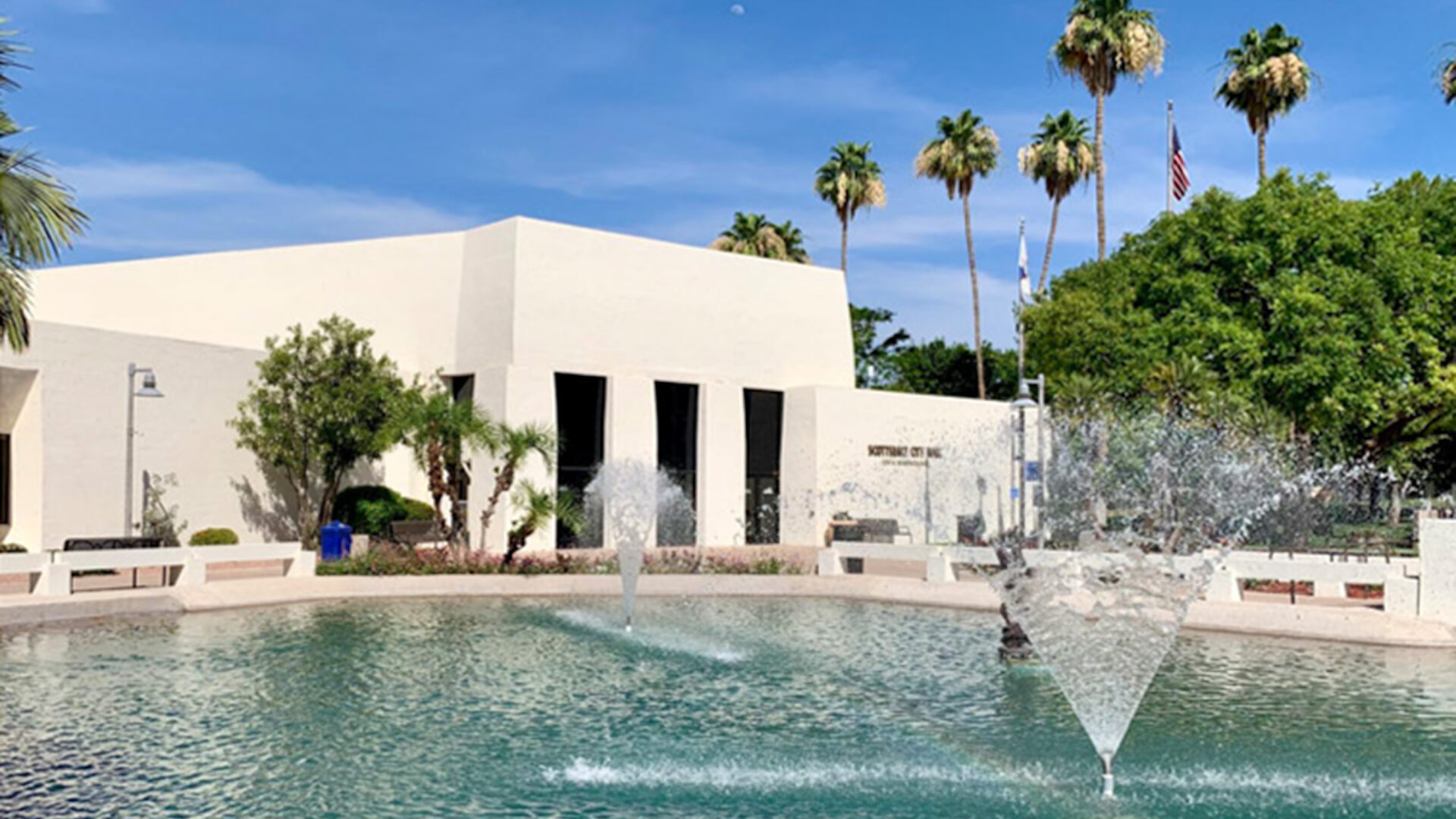
His work was not only residential. It was civic, regional, and deeply tied to place. Scottsdale City Hall, the Scottsdale Civic Center Library, and the Scottsdale Center for the Performing Arts all carry his influence, helping define an architectural identity for a growing desert city.
Gonzales understood that Arizona architecture could be modern without feeling anonymous.
That is what makes his work important.
A Phoenix architect with a regional point of view
Bennie Gonzales was born in Phoenix in 1924 and grew up around the building trades. His early exposure to construction, masonry, and desert materials shaped the way he thought about architecture.
He later studied architecture at Arizona State University and became one of the program’s early graduates. He also studied in Mexico, where he was influenced by regional forms, courtyards, masonry, and Mayan design.
Those influences stayed with him.
Gonzales did not approach modernism as a universal style to be applied anywhere. He believed buildings should respond to climate, culture, material, and place.
Scottsdale’s civic identity
Much of Gonzales’s most recognizable work is tied to Scottsdale.
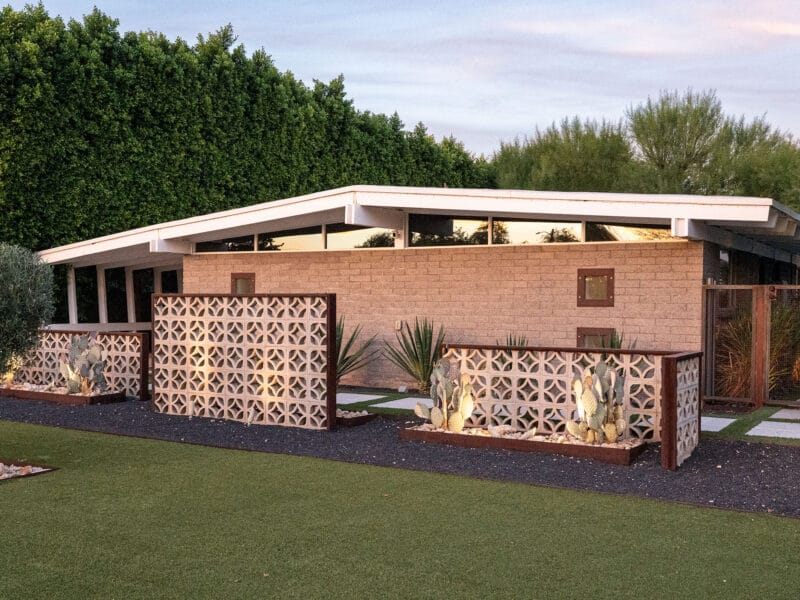
His civic buildings helped give the city a distinct architectural language: low forms, masonry, shaded spaces, courtyards, geometric massing, and a strong sense of desert permanence. These were not glass towers dropped into the desert. They were buildings that understood where they were.
Scottsdale City Hall is one of the clearest examples.
It feels civic without being cold. Modern without being generic. Regional without becoming decorative.
That balance is difficult, and Gonzales handled it well.
Regional modernism
Gonzales is often associated with regionalism: architecture shaped by the materials, climate, and culture of its location.
In Arizona, that meant paying attention to sun, shade, mass, masonry, courtyards, and the desert landscape. His work often incorporated Southwestern, Mexican, and Native American influences without turning them into surface decoration.
He was interested in architecture that belonged to the Southwest.
That is an important distinction.
The best regional modernism does not copy the past. It studies it, abstracts it, and carries it forward through modern form.
A different kind of modern architect
Gonzales’s work does not always fit neatly into the same conversation as Ralph Haver, Al Beadle, Blaine Drake, or Frank Lloyd Wright.
That is exactly why he matters.
Phoenix and Scottsdale modernism were never one thing. They included tract homes, custom residences, civic buildings, churches, museums, resorts, libraries, and commercial spaces. Gonzales represents the civic and regional side of that story.
His buildings helped prove that modern architecture in Arizona could be public, useful, durable, and connected to local identity.
Materials, mass, and desert logic
Gonzales favored practical materials and strong forms.
Masonry, concrete, adobe influence, angular geometry, and shaded public spaces all appear throughout his work. He was not chasing trends. He was designing buildings that could hold up physically, visually, and culturally in the desert.
His work often avoided easy symmetry and conventional angles, creating spaces that felt more open, expansive, and grounded.
There is a seriousness to that approach.
It is not flashy. It is not fragile. It is architecture with weight.
Why Bennie Gonzales still matters
Bennie Gonzales helped give Scottsdale a civic architectural identity at a time when the city was growing into itself.
His work reminds us that modernism in Arizona was not just about private homes and stylish interiors. It was also about public life, civic space, material honesty, and buildings that reflected the desert rather than ignored it.
That legacy still matters.
As Scottsdale and Phoenix continue to grow, Gonzales’s work is a reminder that architecture can be modern, regional, practical, and memorable at the same time.