Frank Lloyd Wright
Frank Lloyd Wright’s presence in Arizona helped define the language of desert residential architecture. Although his work began before the mid-century modern era, his ideas became deeply connected to the way Phoenix and Scottsdale think about modern living: houses shaped by land, light, material, and movement rather than decoration.
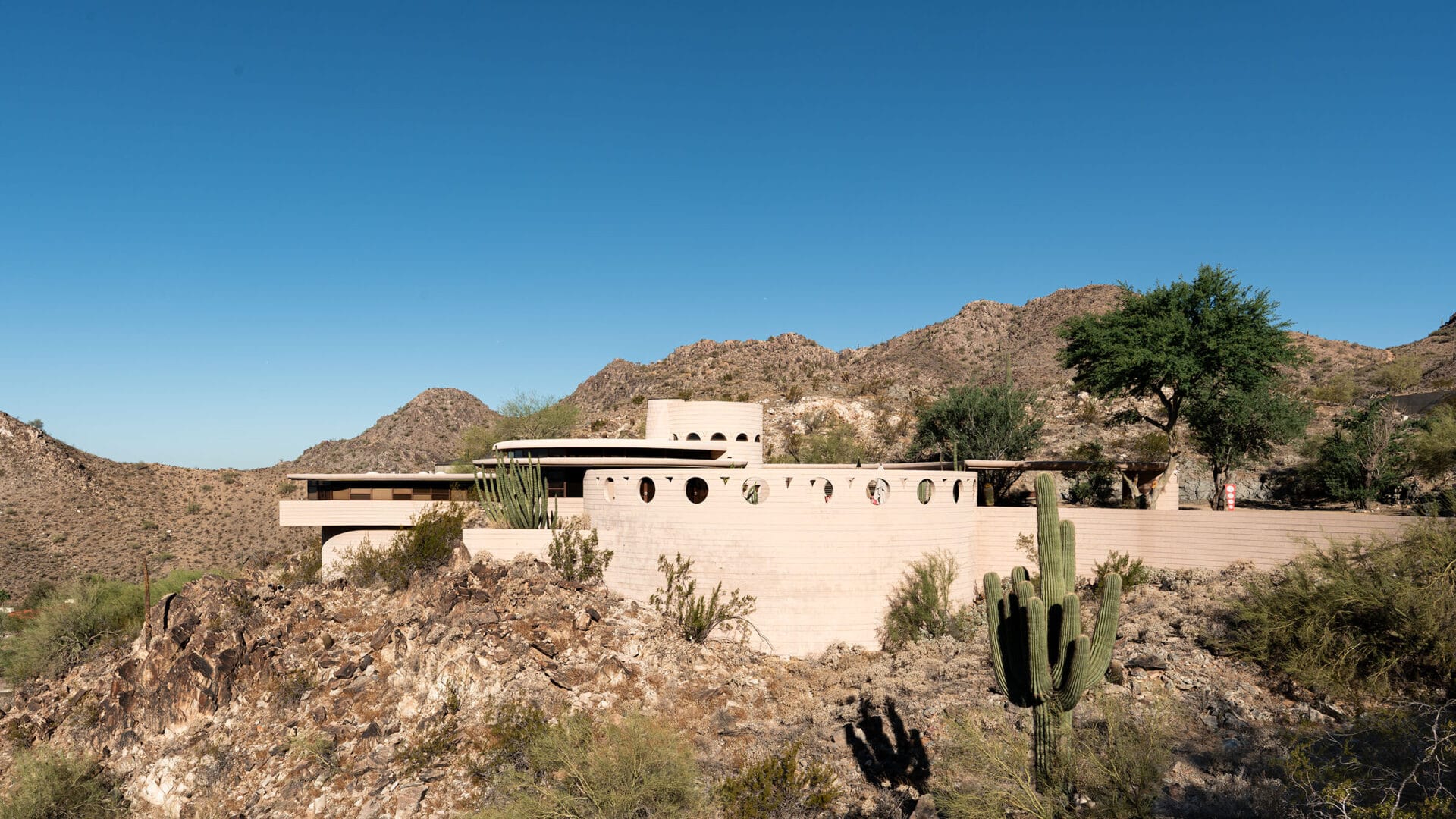
His residential work in the Valley is rare, but its influence is enormous. Wright’s Arizona homes were not designed as objects placed on a site. They were composed around the desert itself, with low horizontal lines, compressed entries, textured masonry, natural materials, filtered light, and rooms that unfold toward views, courtyards, and the surrounding landscape.
What makes Wright’s work so important to Phoenix real estate is the way it established a more serious idea of desert living. The home was not just shelter. It was a relationship between architecture and site. That philosophy influenced generations of architects, apprentices, builders, and designers who carried a desert-responsive approach into residential work across the Valley.
Today, homes connected to Wright and his architectural lineage remain among the most meaningful residential properties in Arizona. They appeal to buyers who understand scarcity, provenance, and the lasting value of architecture that could only belong to this place.