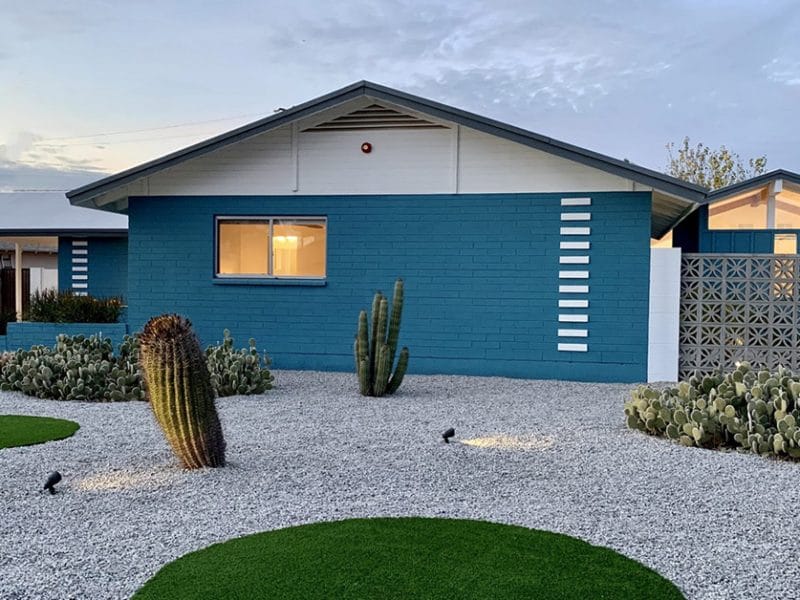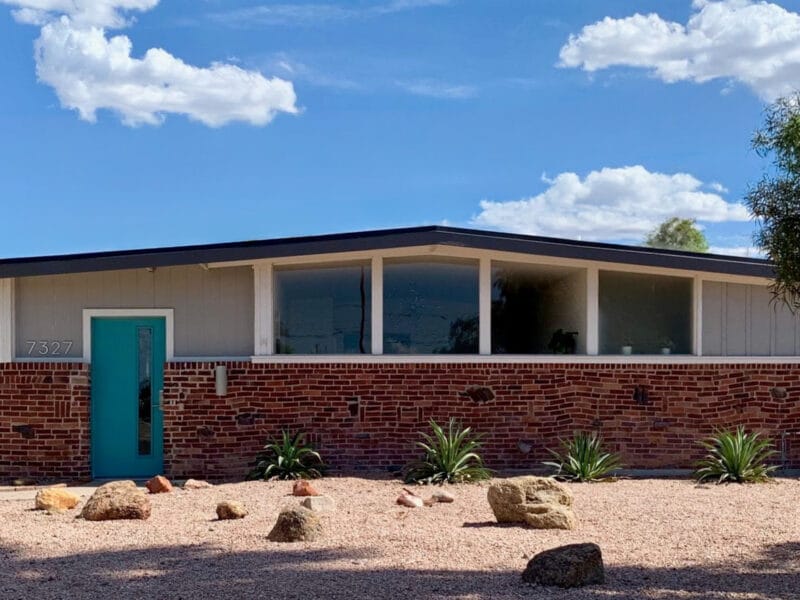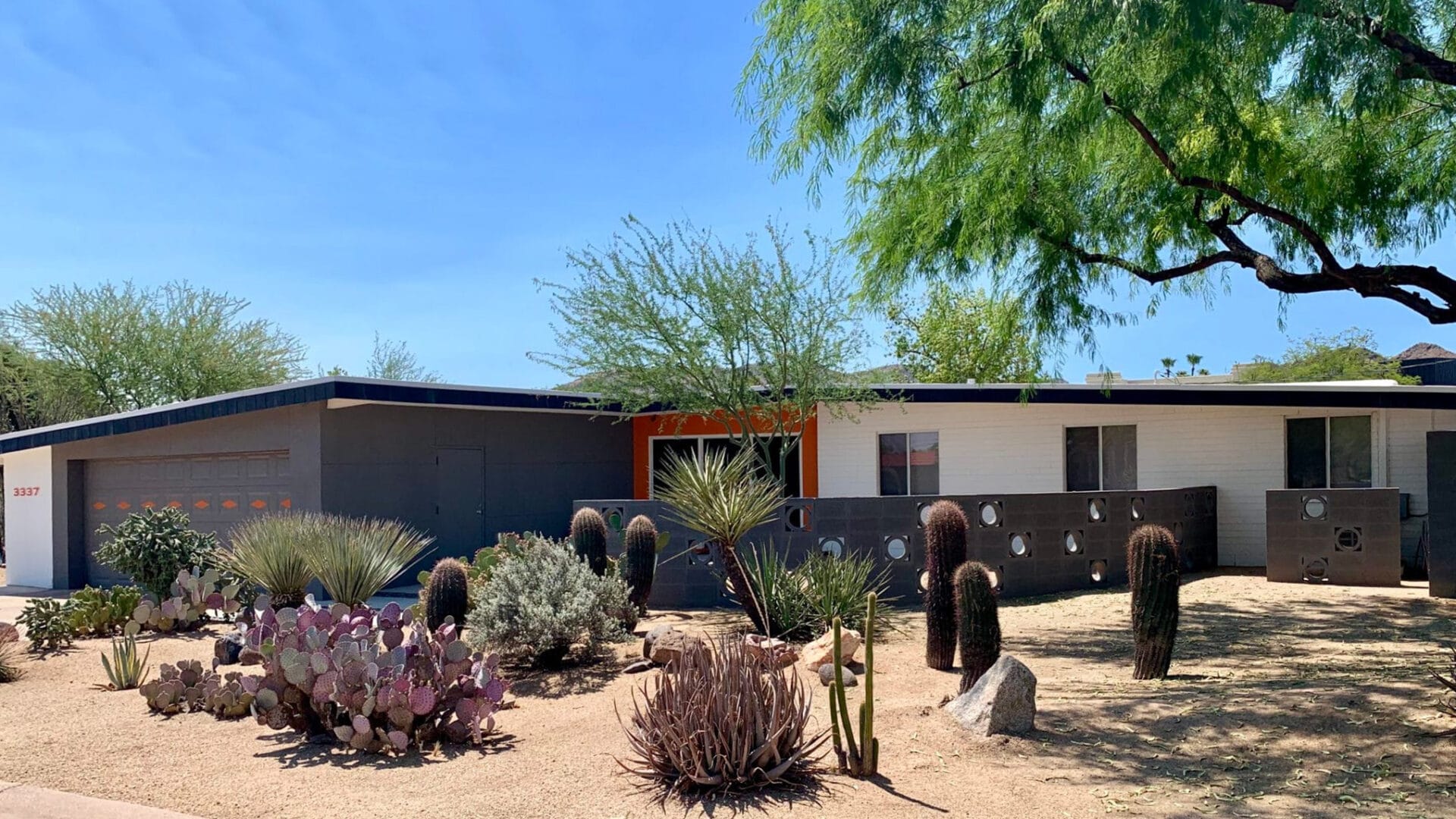
A Phoenix yard should not be fighting the desert.
The best desert landscapes feel intentional, architectural, and connected to the home. For mid-century modern houses, that matters even more. The landscape is not just something around the building. It helps frame the architecture, soften the geometry, create shade, add texture, and support the indoor-outdoor way of living these homes were designed around.
Cactus, agave, yucca, gravel, boulders, palms, citrus, and desert-adapted planting can all work beautifully.
The key is restraint.
Start with the architecture
Before choosing plants, look at the house.
A mid-century modern home usually has strong horizontal lines, block walls, patios, carports, breeze block, clerestory windows, and a direct relationship to the outdoors. The landscape should support those features, not compete with them.
A good front yard can make the roofline feel stronger. It can frame an entry. It can highlight a block wall. It can create privacy without hiding the house.
The best desert landscaping feels like part of the design.
Choose plants with structure
Not every desert plant belongs in every yard.
For mid-century homes, plants with sculptural form usually work best. Agave, cactus, yucca, ocotillo, golden barrel cactus, hesperaloe, desert spoon, and carefully placed palms can give the yard shape without making it feel cluttered.
Think of plants as architecture.
A single strong cactus can be better than ten random shrubs. A row of agave can guide the eye. A specimen palm can add height and drama. Low planting can keep the home visible and let the structure breathe.
Use gravel and hardscape carefully
Gravel is part of the Phoenix landscape, but it should not feel like filler.
The color, size, and layout matter. Too much contrast can look busy. Too much plain gravel can feel unfinished. The best yards usually combine gravel with boulders, pavers, planting, lighting, and clear geometry.
In a mid-century yard, the hardscape should feel clean and deliberate.
Concrete pads, stepping stones, breeze block walls, low planters, and simple edging can all help connect the landscape to the architecture.
Avoid overplanting
One of the easiest ways to weaken a desert yard is to overplant it.
Too many plant types, too many small shrubs, and too many competing textures can make the yard feel chaotic. Mid-century design rewards editing. The same is true outside.
Use fewer plant varieties and repeat them with purpose.
That repetition gives the yard rhythm and keeps the architecture in focus.
Water less, but water correctly
Desert plants do not want to sit in wet soil.
Cactus and succulents generally need well-draining soil and careful watering, especially when newly planted. Overwatering is one of the fastest ways to damage them. Once established, many desert-adapted plants need far less water than traditional landscape plants.
New plants need more attention at first. Mature plants need less.
The goal is not to ignore the landscape. The goal is to understand what each plant actually needs.
Pay attention to placement
Placement matters in Phoenix.
Some cactus and succulents can burn in harsh reflected heat, especially near south- or west-facing walls. Others may need partial shade while they establish. Large cactus, ocotillo, and specimen plants should be placed carefully because moving them later is difficult and expensive.
Think about sun, shade, reflected heat, drainage, mature size, and how the plant will look from inside the house.
The view from the window matters.
Let the yard support indoor-outdoor living
A good mid-century yard is not just curb appeal.
It should make the home live better. A patio should feel connected to the interior. A pool should feel integrated with the architecture. A courtyard should create privacy and calm. A planting bed should soften glass or frame a view.
This is where desert landscape becomes more than maintenance.
It becomes part of the experience of the home.
Keep it clean, not sterile
Desert landscaping does not need to be barren.
The best Phoenix yards balance structure and softness. Gravel, cactus, and concrete can be softened with palms, citrus, low grasses, flowering desert plants, and careful lighting. The goal is not to make the yard feel harsh. The goal is to make it feel composed.
A little shade, a little texture, and the right plant forms can change everything.
The bottom line
Desert landscaping should make a Phoenix mid-century home look better, live better, and feel more connected to its setting.
Choose plants with structure. Use hardscape with intention. Avoid clutter. Respect the architecture. Plan for shade, drainage, and long-term maintenance.
When the landscape is done well, it does not decorate the house.
It completes it.