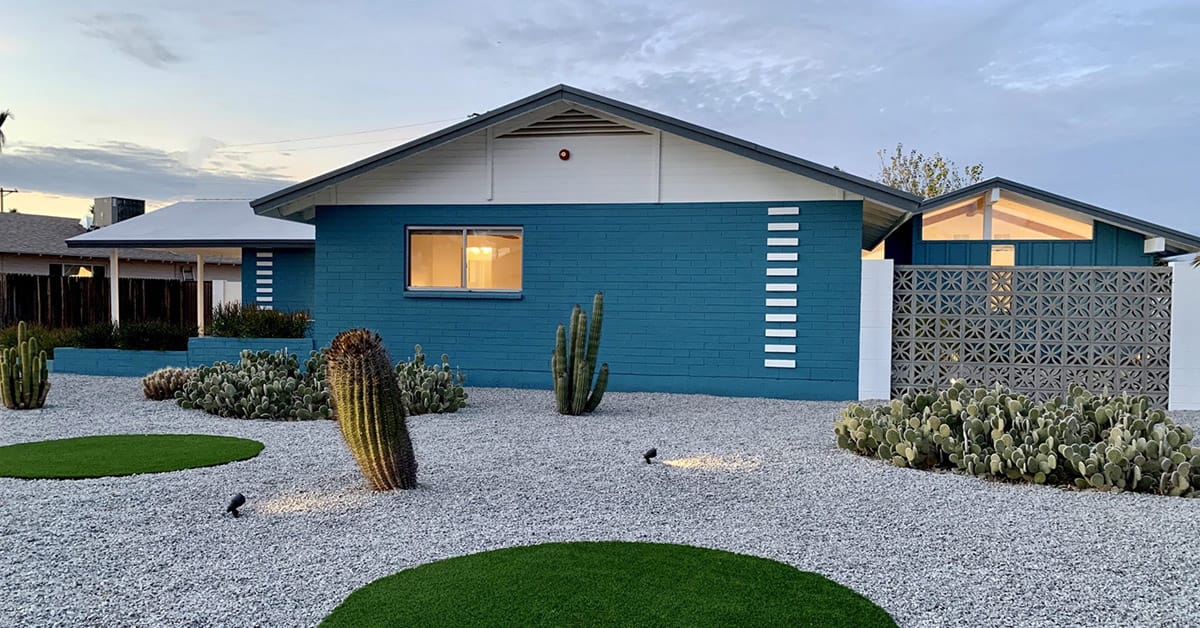
Buying a mid-century modern home takes more than a standard needs and wants checklist.
Bedrooms, bathrooms, square footage, lot size, and budget still matter. But with a mid-century home, the better question is not just whether the house checks the usual boxes. It is whether the architecture, condition, layout, and renovation potential make sense.
Some homes have been beautifully preserved. Some have been stripped of character. Some look rough but have the right bones. Others look polished online but have expensive problems hiding under the surface.
That is why the search needs a sharper eye.
Start with the architecture
Before focusing on finishes, look at the structure and design.
Does the home have a strong roofline? Clerestory windows? Breeze block? Original masonry? Exposed beams? A patio-port or carport? Large glass openings? A strong relationship to the yard, pool, or courtyard?
These details matter because they are what make the home special.
A mid-century home does not need to be perfect, but it should have something worth preserving. The more original character the home still has, the more thoughtful the renovation path can be.
Know the difference between needs and wants
A need is something that affects the way you live or the value of the property.
A want is something that would be nice to have, but can be changed, added, or improved later.
For a mid-century modern buyer, true needs may include the right neighborhood, strong architectural bones, natural light, a functional layout, privacy, outdoor space, or room for a smart renovation.
Wants might include a pool, original cabinets, terrazzo floors, a specific architect, a certain color palette, or a fully finished kitchen.
The distinction matters. If you treat every preference like a deal-breaker, you may miss the right house.
Evaluate the condition honestly
Mid-century homes are often 60 to 80 years old.
That does not mean they are a problem, but it does mean condition matters. Plumbing, electrical, roofing, HVAC, windows, drainage, sewer lines, and past renovations should all be reviewed carefully.
Some homes were updated well. Others were patched together over time. Some have good structure but need major system work.
A home that looks cosmetic can become expensive quickly if the major items have been ignored.
Understand renovation potential before you buy
This is one of the biggest advantages of working with someone who understands both real estate and design.
Before writing an offer, you should have a realistic sense of what the home can become. Can the layout be improved? Is there room for an addition? Does the roofline support the design direction? Can the kitchen open up without ruining the architecture? Is the outdoor space worth investing in?
Most buyers do not need a full design plan before buying.
They do need enough information to understand cost, scope, and potential.
Pay attention to the lot
The lot is a major part of the value.
Mid-century homes were often designed around orientation, light, shade, privacy, patios, pools, and indoor-outdoor living. The way the house sits on the lot can be just as important as the house itself.
Look at sun exposure, views, setbacks, yard layout, pool placement, privacy, carport or garage position, and how the home connects to outdoor space.
A great lot can elevate a simple house.
A bad lot can limit a good one.
Neighborhood matters
Phoenix, Scottsdale, Tempe, Paradise Valley, and Arcadia all have different mid-century pockets.
Some neighborhoods are known for Ralph Haver homes. Others have Al Beadle, Blaine Drake, Charles and Arthur Schreiber, Frank Lloyd Wright influence, or custom one-off designs. Some areas are more preserved. Others have more remodel activity. Some offer larger lots. Others offer walkability or stronger lifestyle access.
The right neighborhood depends on what you value. Explore our Featured Neighborhoods.
Architecture matters, but so does the way you want to live.
Watch out for bad renovations
A freshly remodeled home is not always the better home.
White shaker cabinets, gray floors, trendy tile, awkward layouts, black windows, oversized fixtures, and generic finishes can make a mid-century home feel like any other house.
A bad renovation can be expensive to undo.
Sometimes the better buy is the less finished home with better architecture, better light, better proportions, and more original character.
Think about long-term value
A strong mid-century modern home should have more than style.
It should have architectural integrity, a good neighborhood, a thoughtful renovation path, and features that will continue to matter over time. Buyers are drawn to homes with character, but they are even more drawn to homes where the character has been preserved and improved with care.
That is where design and real estate meet.
The right decisions before you buy can protect both your lifestyle and your investment.
The bottom line
Buying a mid-century modern home is not just about finding something that looks cool.
It is about understanding the architecture, the lot, the condition, the neighborhood, the renovation potential, and the long-term value.
The right home may not be the most obvious one.
It may be the one with the best bones, the best light, the best setting, and the clearest path forward.


