Ralph Haver helped shape the look of postwar Phoenix.
His name may not be widely known outside Arizona, but his work is everywhere in the Valley: neighborhoods, schools, churches, banks, municipal buildings, apartments, motels, and some of the most recognizable mid-century modern tract homes in the region.
The homes are the easiest to love.
Known today as Haver Homes, these modest modern houses helped bring good design to everyday postwar living. They were efficient, optimistic, approachable, and distinctly Phoenix.
That is why they still matter.
Ralph Haver arrives in Phoenix
Ralph Haver was born in California in 1915 and studied architecture at the University of Southern California.
After serving in World War II, he settled in Phoenix in 1945. At the time, the city was growing quickly and beginning to imagine itself as something larger, newer, and more modern. Haver’s family had already relocated to Phoenix, drawn by the opportunity to build in a city with room to expand.
His early work grew out of that moment.
Working with his father, Harry Haver, a mason, and his brother Robert, a builder, Haver began designing modern-influenced ranch homes for a changing postwar city. One of his early projects was a group of experimental homes near 12th Street and Highland, in what is now the Canal North area.
Phoenix was ready for a new kind of house.
Haver helped give it one.
A modern house for everyday life
Haver Homes were not custom estates.
That was part of the point.
They were modest, efficient, stylish homes designed for postwar families. Many were smaller by today’s standards, but the best examples live larger than their square footage because of light, layout, patios, and indoor-outdoor connection.
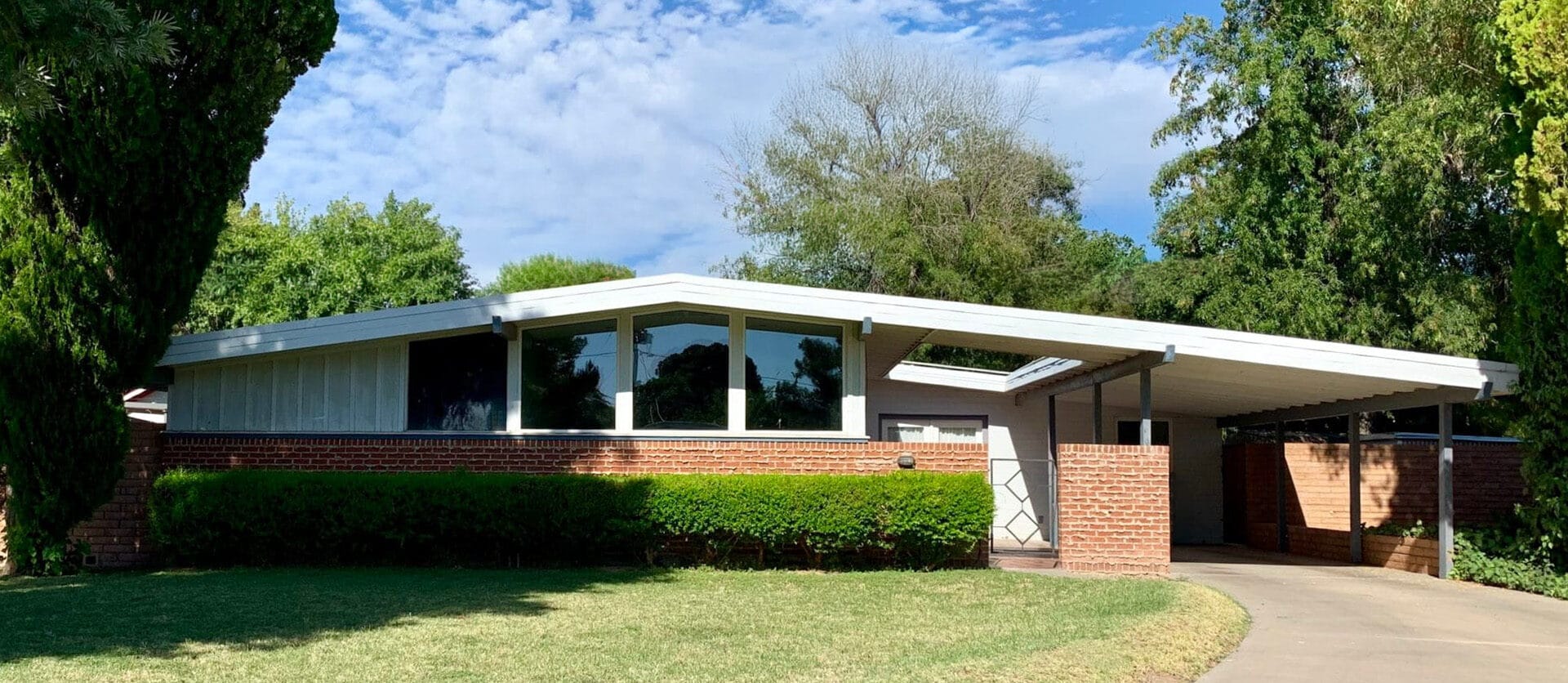
Typical Haver features include low-sloped rooflines, clerestory windows, exposed masonry, angled posts, window walls, breeze block, carports, patio-ports, and simple open plans.
The homes were practical, but they had presence.
They brought modern design into neighborhoods, not just magazines.
The Haver look
The appeal of a Haver Home comes from proportion and simplicity.
A low roofline gives the house a relaxed horizontal feel. Clerestory windows bring light into the interior. Patio-ports blur the line between carport, entry, and outdoor room. Breeze block adds shade, pattern, privacy, and texture.
The best examples feel casual and precise at the same time.
They are not oversized. They are not overworked. They rely on clean lines, smart siting, natural light, and a strong relationship to the outdoors.
That is why a well-preserved Haver still feels modern today.
Haver and the growth of Phoenix
Haver’s work was much broader than single-family homes.
Through Haver & Nunn, the firm he formed with Jimmie Nunn, his office contributed to many parts of the built environment in Phoenix and beyond. The firm designed homes, apartments, churches, schools, banks, municipal buildings, commercial projects, and more.
Haver also worked with major builders and developers who helped shape postwar Phoenix, including Del Webb, Fred Woodworth, Dell Trailor, Sam Kitchell, Samuel Hoffman, Dan Mardian, and David Friedman.
His influence spread because his work could operate at scale.
That matters. Haver was not only designing individual buildings. He was helping define the visual language of a growing city.
Haver neighborhoods in Phoenix and Scottsdale
Today, Haver neighborhoods remain some of the most desirable mid-century modern pockets in the Valley.
Town & Country Scottsdale, Town & Country Manor, Town & Country Paradise, Marlen Grove, Mayfair Manor, Janet Manor, Northwood, Starlite Vista, Windemere, and other neighborhoods all carry pieces of the Haver story.
Each neighborhood has its own character, but the best homes share a familiar language: low rooflines, clerestory glass, carports, patios, block, breeze block, and an easy relationship to desert living.
These were not luxury homes when they were built.
That is part of what makes them important.
They show how modern design reached everyday Phoenix.
Why Ralph Haver still matters
Ralph Haver’s legacy is not just nostalgia.
His work still matters because the ideas are still good: better light, better indoor-outdoor living, efficient plans, modest scale, simple materials, and architecture with personality.
In a city full of generic remodels and oversized new construction, Haver Homes remind us that good design does not need to be complicated.
It needs a point of view.
That is why these homes continue to attract buyers, owners, designers, and preservation-minded renovators across Phoenix and Scottsdale.
A great Haver is not just a mid-century house.
It is a piece of Phoenix optimism.


