Mid-century modern design was never just about furniture.
The best homes from the era were designed around a larger idea: the house, patio, pool, garden, and view should work together. Architecture did not stop at the sliding glass door. It extended into the landscape.
That is one of the reasons these homes still feel so good today.
Indoor-outdoor living was the point
Mid-century homes were designed for a more open, casual way of living.
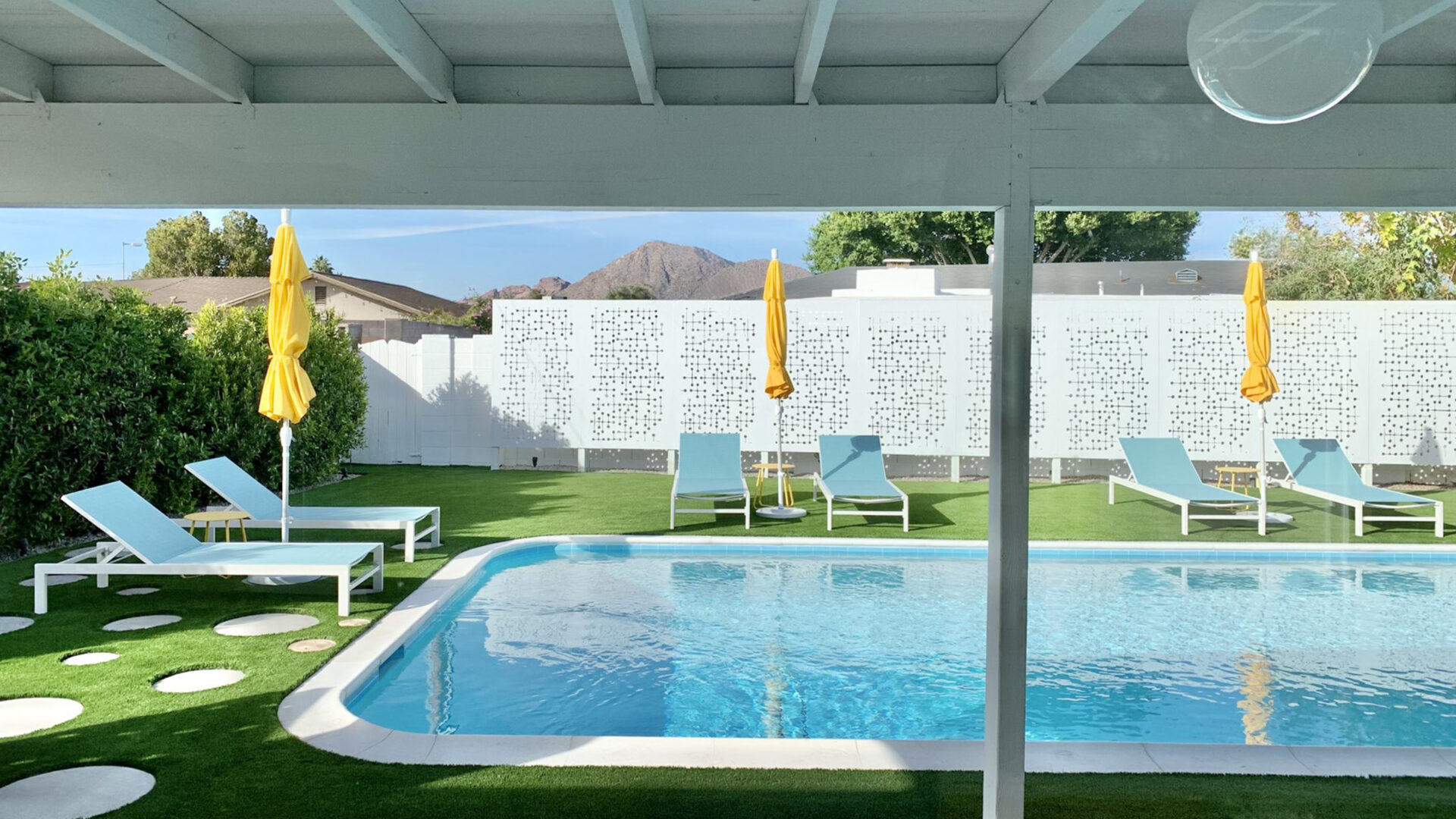
Large glass doors, patios, courtyards, covered outdoor rooms, carports, breeze block, pools, and deep overhangs all helped blur the line between inside and outside. The goal was not just to look modern. The goal was to make daily life feel lighter, easier, and more connected to nature.
In Phoenix, that idea matters even more.
Our climate rewards shade, orientation, airflow, and outdoor spaces that are planned with care. A good mid-century home does not ignore the desert. It works with it.
Landscape is part of the architecture
The landscape around a mid-century home should feel intentional.
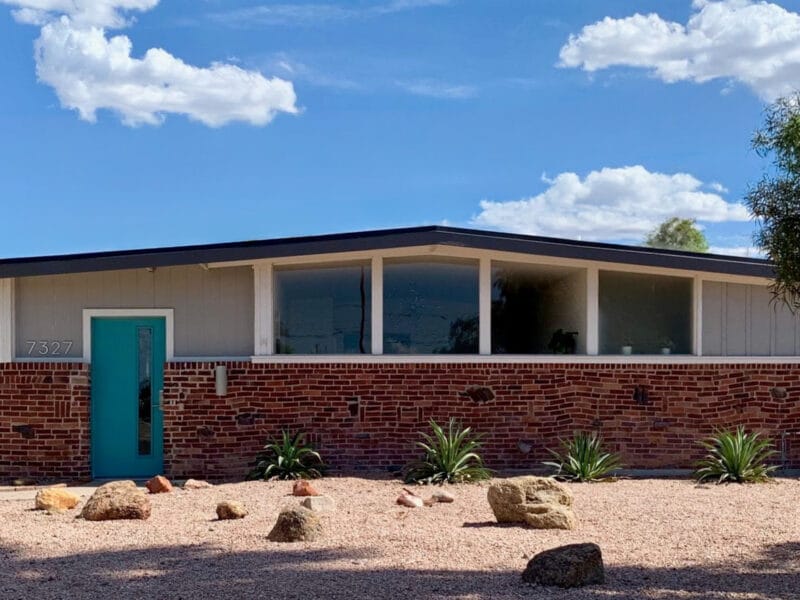
Planting, hardscape, walls, gravel, grass, shade, pool placement, and exterior lighting all shape the way the home is experienced. A patio can become another living room. A courtyard can create privacy and calm. A breeze block wall can frame a view, filter light, and add texture.
These elements are not decoration. They are part of the architecture.
That is why generic landscaping can weaken a good house. Too much turf, random planting, oversized pavers, or trend-driven outdoor features can fight the original design instead of supporting it.
Plants should support the design
Plants have a place in mid-century modern interiors, but they should not be treated like props.
A fiddle leaf fig in the corner does not make a room mid-century. What matters is how planting supports the architecture. Interior plants can soften glass, add texture, and reinforce the connection to the outside. Exterior planting can shape privacy, shade, and the way a room feels from inside the house.
The best choices feel integrated.
In Phoenix, that often means desert-adapted plants, sculptural forms, controlled greenery, and a careful balance between softness and structure. Agave, cactus, yucca, olive, citrus, palm, and native desert planting can all work when used with restraint.
Glass needs something to look at
One of the biggest mistakes in mid-century renovation is treating windows as isolated design features.
Glass walls and sliders only work if there is something worth seeing outside. A blank wall, poor landscape, dead patio, or exposed utility area can weaken the entire room. The exterior view becomes part of the interior composition.
That means the outdoor space needs the same attention as the room inside.
When the view is right, the home feels larger, calmer, and more complete.
Shade creates livability
In the desert, shade is not optional.
Deep overhangs, covered patios, trees, masonry walls, screens, and shade structures can make outdoor spaces usable and protect the home from harsh sun. Mid-century homes understood this well. The best examples used shade as both a practical and architectural device.
A good shade strategy can make a home feel cooler, more comfortable, and more connected to the landscape.
It can also make the architecture stronger.
The bottom line
Mid-century modern design is not just a look inside the house.
It is a relationship between architecture and landscape. The patio, pool, courtyard, planting, walls, shade, and views all matter because they shape how the home lives.
The right landscape does not decorate a mid-century home.
It completes it.