Mid-century modern design did not appear out of nowhere.
It grew out of early modernism, new technology, industrial production, European design movements, and the optimism that followed World War II. By the middle of the 20th century, architecture and design were moving away from ornament and toward something cleaner, more practical, and more connected to modern life.
The result was a design language that still feels relevant today.
Early modernism
The roots of mid-century modern design reach back to the early 20th century.
As technology, manufacturing, and urban life changed, architects and designers began questioning older styles. Heavy ornament and historical imitation started to feel less connected to the modern world. Designers looked for clarity, honesty, function, and new ways to use materials.
This shift laid the foundation for modern design.
Bauhaus and international influence
The Bauhaus school in Germany became one of the most important forces in modern design.
Founded in 1919, Bauhaus brought together architecture, furniture, graphic design, craft, and industrial production. Its ideas were simple but powerful: form should follow function, materials should be used honestly, and good design should be part of everyday life.
As European designers and architects moved to the United States, these ideas helped shape American modernism.
Art Deco and Streamline Moderne
Before mid-century modernism fully emerged, Art Deco and Streamline Moderne helped bridge the gap between ornament and modernity.
Art Deco brought geometry, glamour, and machine-age confidence. Streamline Moderne simplified those ideas further, introducing smoother forms, horizontal lines, rounded corners, and a sense of motion inspired by cars, trains, ships, and aviation.
These styles helped move design away from the past and toward the future.
Postwar optimism
After World War II, modern design found its moment.
America was expanding. Families were moving into new suburbs. Materials and construction methods were changing. There was a belief that design could make daily life better, smarter, and more efficient.
Mid-century modern homes reflected that optimism.
They used open plans, large windows, low rooflines, simple materials, patios, pools, carports, and indoor-outdoor connections. Furniture became lighter and more flexible. Interiors became more open and casual. Design was no longer only about decoration. It was about how people actually lived.
California, the Case Study program, and desert modernism
The West played a major role in shaping mid-century modern architecture.
In California, the Case Study House Program promoted experimental modern homes designed for postwar living. Architects explored steel, glass, open plans, modular construction, and a stronger relationship between interior and exterior space.
In the desert, modernism took on its own character. Shade, orientation, courtyards, masonry, deep overhangs, and low horizontal forms became essential. Palm Springs, Phoenix, and Scottsdale each developed their own versions of modern desert living.
Mid-century modernism in Phoenix
Phoenix was a natural fit for the movement.
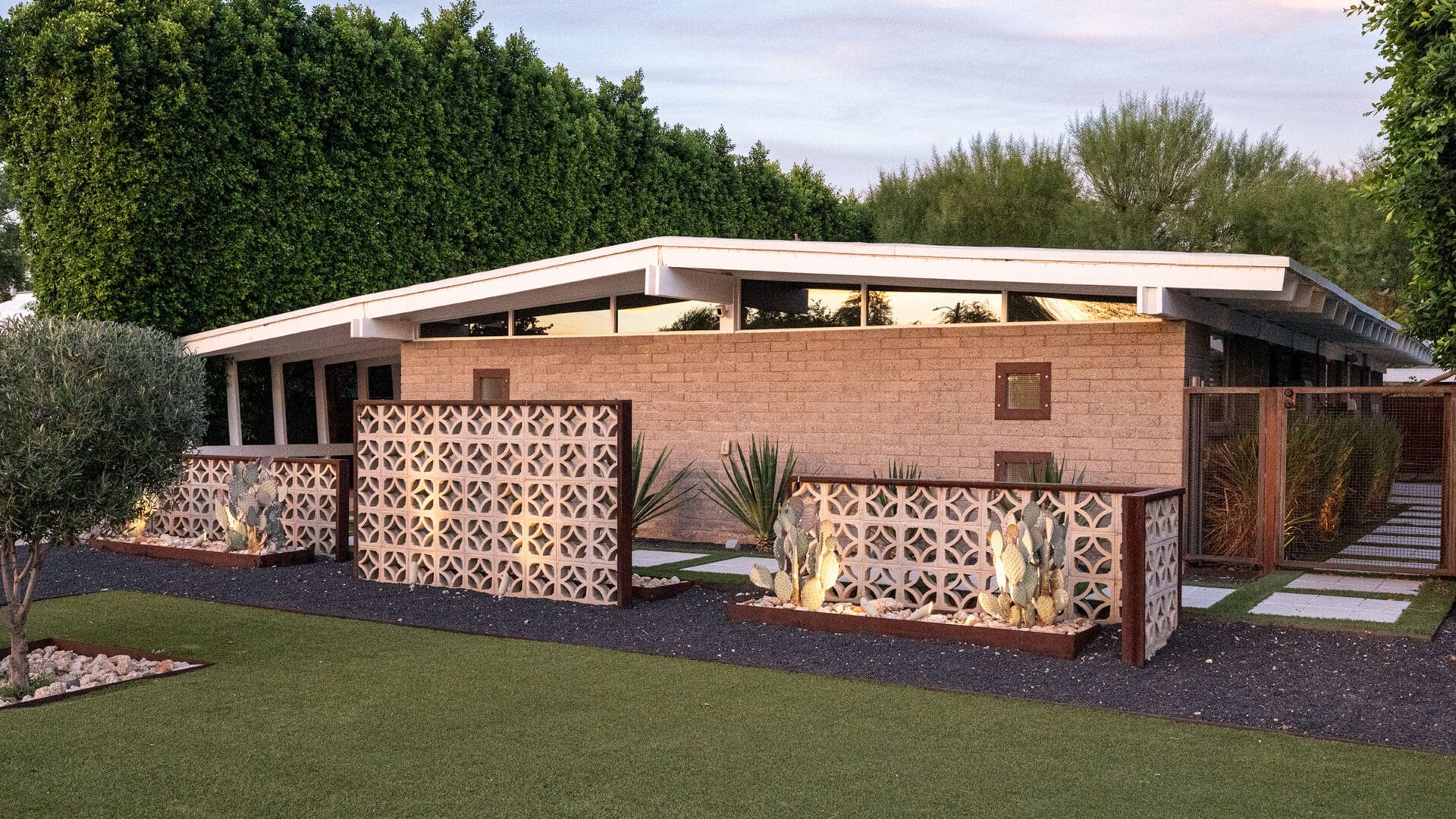
The climate rewarded indoor-outdoor living, shaded patios, breeze block, clerestory windows, masonry walls, carports, and simple low-slung forms. Architects and builders like Ralph Haver and Al Beadle helped define a version of modernism that was practical, optimistic, and deeply connected to the desert.
These homes were not just stylish. They were intelligent responses to place.
That is why so many of them still feel right today.
Why the history matters
Understanding mid-century modern history helps explain why the style still has power.
The best work from the era was not about nostalgia or trend. It was about clarity, proportion, function, material honesty, and better living. Those ideas are still useful. They still guide good renovation, restoration, and new design.
Mid-century modern design matters because it was built around a belief that the future could be better.
That belief is still worth carrying forward.