Mid-century modern design is easy to recognize when it is done well.
It feels clean, open, intentional, and connected to the way people actually live. The best examples are not trying too hard. They rely on proportion, light, materials, and restraint instead of decoration.
That is what makes the style last.
Low, horizontal architecture
One of the clearest mid-century modern characteristics is the low-slung profile.
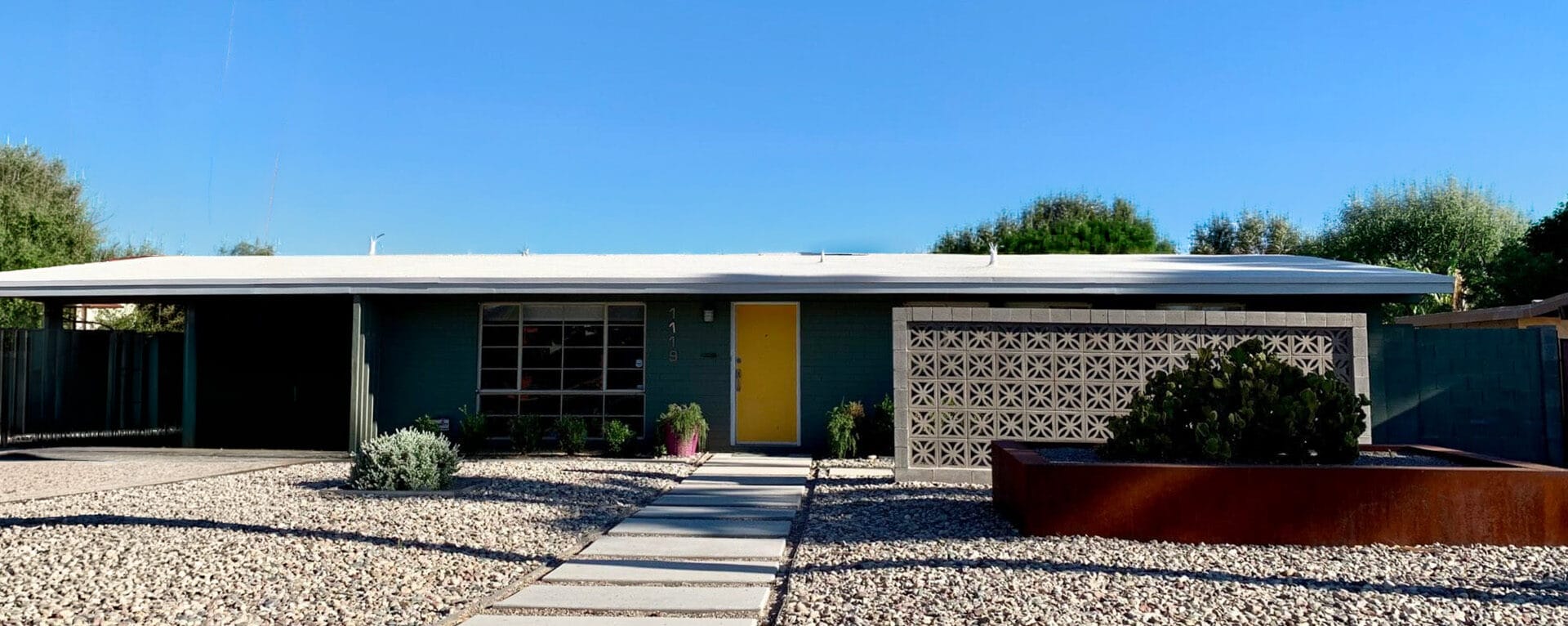
These homes often sit close to the ground with long rooflines, deep overhangs, carports, patios, and simple forms. The architecture feels horizontal rather than vertical. It spreads out, connects to the lot, and creates a calmer relationship with the landscape.
In Phoenix, that low profile also makes sense for the desert. Shade, orientation, and roofline are part of how the home lives.
Clerestory windows and natural light
Light is central to mid-century modern design.
Clerestory windows, large glass openings, window walls, and sliding doors were used to bring in daylight while maintaining privacy and shade. The goal was not just bigger windows. The goal was better light.
A good mid-century home uses glass with purpose. It frames views, connects rooms to the outdoors, and makes the floor plan feel more open.
Indoor-outdoor living
Mid-century homes were built around a more casual way of living.
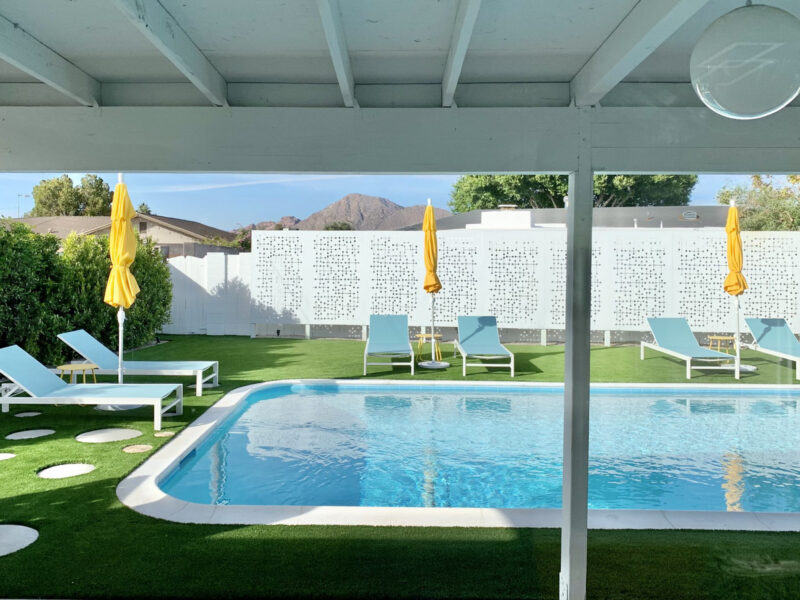
Patios, courtyards, pools, carports, breeze block walls, and covered outdoor rooms helped blur the line between inside and outside. In Phoenix, this is one of the most important parts of the style.
The patio is not an afterthought. The landscape is not decoration. The outdoor space is part of the architecture.
Clean lines and simple forms
Mid-century modern design favors clarity.
The lines are clean. The forms are simple. Ornament is reduced. The strongest homes do not need extra decoration because the architecture itself carries the character.
That does not mean the design is plain. It means every move matters.
A roofline, a beam, a block wall, a window pattern, or a patio post can create more impact than a room full of trendy finishes.
Honest materials
Mid-century homes often use materials in a direct, natural way.
Concrete block, brick, wood, glass, steel, plaster, terrazzo, tile, and stone all have a place in the style. The best projects let materials speak instead of covering everything up.
In Phoenix, masonry is especially important. Block walls, breeze block, fireplaces, and exterior screens give many homes texture, shade, and identity.
Function before decoration
Mid-century design was built around usefulness.
Floor plans were designed to be efficient. Furniture was lighter and more flexible. Storage, circulation, indoor-outdoor access, and natural light all mattered. The point was not just to create something attractive. The point was to improve daily life.
That is why the style still feels current.
Good design does not need to be complicated. It needs to work.
A mix of geometry and warmth
Mid-century design often balances clean geometry with organic warmth.
Straight lines, grids, beams, and block patterns can sit alongside wood grain, curved furniture, sculptural lighting, planting, and textured materials. The best spaces feel edited, but not cold.
This balance is one of the reasons mid-century homes still appeal to so many people. They are modern without feeling sterile.
Color with restraint
Color is part of the mid-century language, but it works best when used with control.
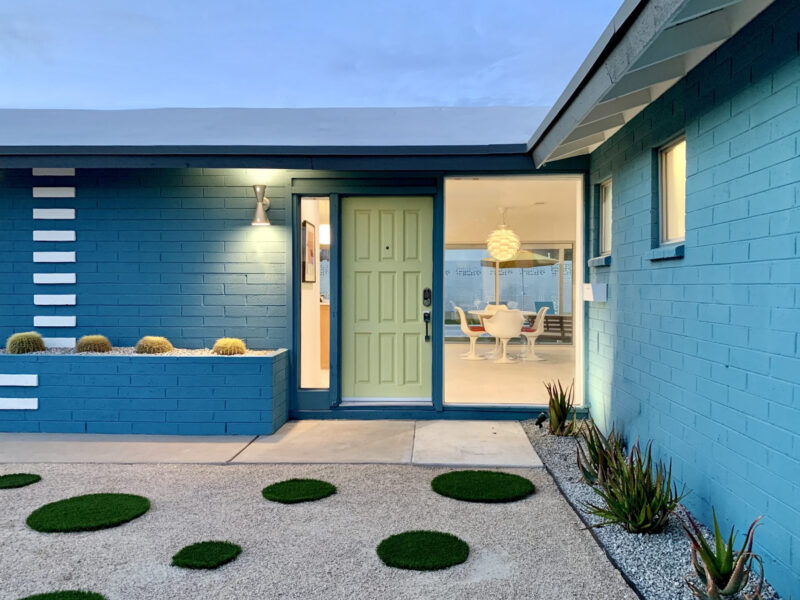
A turquoise door, warm wood cabinetry, muted green block, orange fabric, mustard accents, or a soft desert palette can all feel right when tied to the architecture. The mistake is turning the house into a theme.
The best color choices feel integrated.
They support the home instead of performing for it.
The bottom line
Mid-century modern characteristics are not just decorative details.
They come from a larger design philosophy: better light, better flow, honest materials, indoor-outdoor living, and a simpler way of building around everyday life.
That is why the style continues to matter.
When the architecture, landscape, furniture, and materials all support the same idea, a mid-century modern home feels timeless.