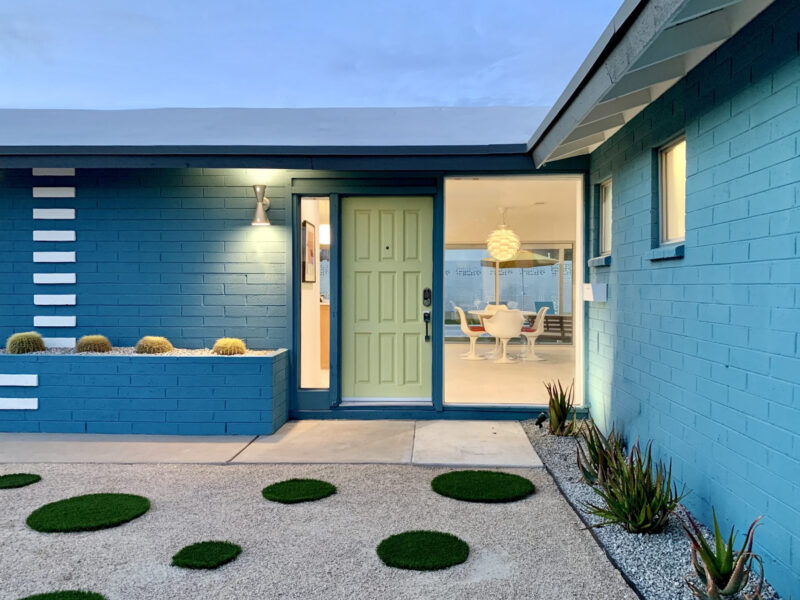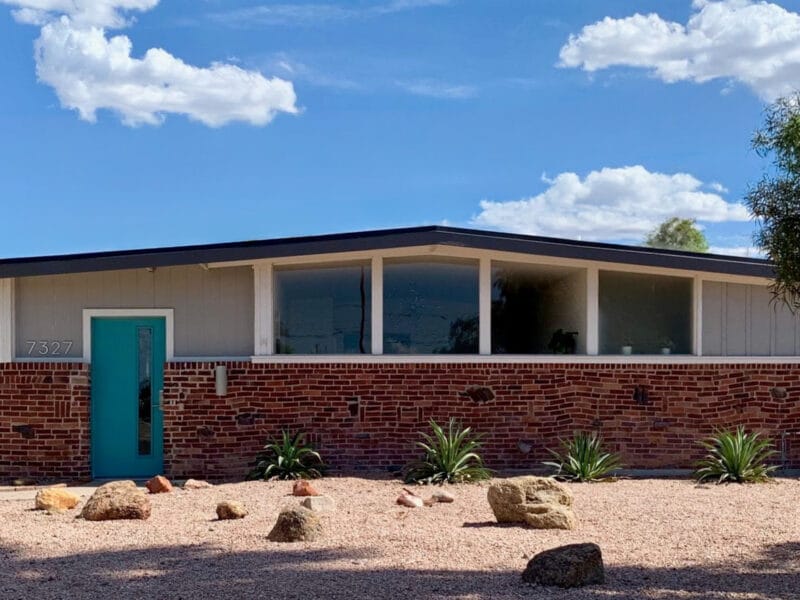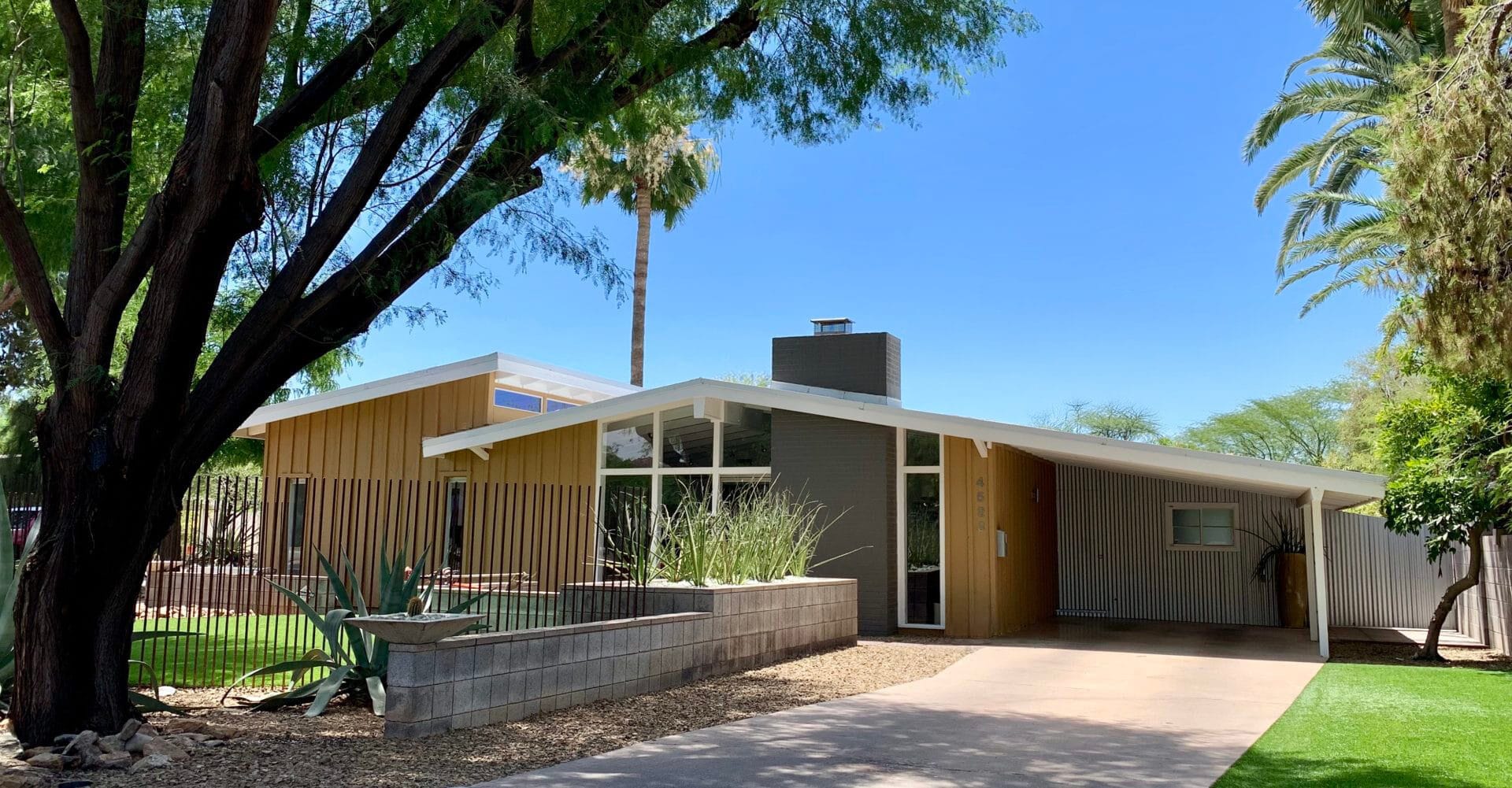
Phoenix has a deeper mid-century modern story than most people realize.
Across the Valley, there are neighborhoods shaped by postwar optimism, desert living, modern architecture, and the builders and architects who helped define the city. Some are known for Ralph Haver homes. Some carry the influence of Al Beadle, Blaine Drake, Charles and Arthur Schreiber, Frank Lloyd Wright, or custom desert modern design. Others are quieter pockets where the architecture still shows up in rooflines, breeze block, clerestory windows, patios, carports, and indoor-outdoor living.
This guide highlights some of the most important mid-century modern featured neighborhoods in Phoenix and Scottsdale.
Arcadia
Arcadia is not purely mid-century modern, but it has some of the Valley’s most interesting architectural moments.
Once defined by citrus groves and large estate lots, Arcadia evolved through the 1950s and 1960s into one of Phoenix’s most desirable residential areas. The neighborhood includes a wide mix of ranch homes, custom estates, and select modernist designs influenced by architects including Frank Lloyd Wright, Ralph Haver, and Charles and Arthur Schreiber.
The appeal is obvious: large lots, mature trees, Camelback Mountain views, and a location between Old Town Scottsdale, the Biltmore, and central Phoenix. Arcadia’s mid-century homes are not always easy to find, but when they appear, they often offer a rare combination of architecture, land, and lifestyle.
For buyers, Arcadia is less about finding a uniform tract neighborhood and more about recognizing individual homes with strong design potential.
Hy-View Scottsdale
Hy-View sits in southwest Scottsdale near the Papago Mountains, the Arizona Canal, and Old Town Scottsdale.
Built between the late 1950s and mid-1960s, the neighborhood offers a mix of ranch and contemporary designs with varied elevations, rooflines, and lot sizes. That variety is part of the appeal. Hy-View does not feel overly repetitive. It has a looser, more individual character than many postwar subdivisions.
The location is a major strength. Residents are close to Old Town Scottsdale, Arcadia, Tempe, Papago Park, and central Phoenix, with walking, biking, and recreation nearby.
For mid-century buyers, Hy-View is a neighborhood where design potential and location meet. The best homes have strong bones, mountain views, and the kind of Scottsdale lifestyle that continues to drive demand.
Janet Manor
Janet Manor is one of North Central Phoenix’s quiet Ralph Haver pockets.
Designed by Haver and built by Fred Woodworth in the late 1950s, the neighborhood is known for one of Haver’s most recognizable residential forms: a low center-ridge roofline, large front trapezoidal windows, and a patio-port that blends covered parking with outdoor living.
The homes have a modest scale, but the architecture has real presence. Original masonry, exposed rooflines, front patio connections, and variations in block, brick, and color give the neighborhood texture.
Janet Manor works because it feels tucked away while still being central. It offers the charm of a small architectural enclave with quick access to Downtown Phoenix, the Biltmore area, and North Central amenities.
For Haver buyers, Janet Manor is one of the neighborhoods worth watching.
Marion Estates
Marion Estates sits near the edge of Paradise Valley with views of Camelback Mountain and the Phoenix Mountain Preserve.
Originally marketed as a scenic subdivision, the neighborhood still carries that feeling. Larger lots, sloping desert terrain, mountain views, and a mix of custom and architecturally interesting homes give Marion Estates a more varied and upscale character than many mid-century neighborhoods.
This is not a uniform tract. That is part of the appeal. The area includes flat-roof modern homes, low-slung designs, custom residences, and notable Ralph Haver and Al Beadle influence.
For buyers, Marion Estates offers a rare combination: architectural variety, larger lots, prime location, and proximity to Paradise Valley, Arcadia, the Biltmore, Old Town Scottsdale, and Sky Harbor.
It is one of the best areas in Phoenix for buyers who want mid-century character with more space and a stronger estate feel.
Marlen Grove
Marlen Grove is one of Phoenix’s most stylish Ralph Haver neighborhoods.
Built in the early 1950s, the neighborhood captures the easy optimism of postwar Arizona living. Haver designed multiple elevations for the homes, giving the area variety while keeping a cohesive architectural language.
The standout homes feature low-slung rooflines, high clerestory windows, angled carport and patio posts, breeze block, color accents, and mature landscaping. The result is a neighborhood that feels relaxed, architectural, and quietly elegant.
Marlen Grove’s location in North Central Phoenix adds to its appeal. The area feels tucked away, but it is close to Uptown, Midtown, Downtown Phoenix, and the restaurants and amenities along 7th Street and Central Avenue.
For buyers looking for Haver character, Marlen Grove is one of the strongest neighborhoods in the Valley.
Mayfair Manor
Mayfair Manor is another North Central Phoenix neighborhood tied to Ralph Haver’s postwar residential work.
Built between the late 1940s and early 1950s, the homes were designed around livability, modest scale, and modern details. Original features included beamed ceilings, large carports, covered patios, and simple, efficient floor plans.
The neighborhood includes two main elevation types: low-pitch gable-end homes with clerestory windows and low-slung center-pitch homes with front window walls. The best examples still show the balance that makes Haver homes so appealing: simple forms, natural light, and a strong relationship to the outdoors.
Mayfair Manor is not flashy, and that is part of its charm. It is a livable, central, highly approachable mid-century neighborhood with strong renovation potential.
Northwood
Northwood is a classic North Central Phoenix Haver neighborhood with a great backstory.
Marketed in the early 1950s as “The house that 500 housewives built,” Northwood was designed around feedback from women about how a home should live. The result was a practical, efficient plan with strong common spaces, generous storage, and modern residential details.
The homes include several Haver elevations, including low-pitch gable designs, low-slung rooflines, clerestory windows, window walls, breeze block, and bright color accents.
Northwood has the qualities buyers continue to want: large lots, mature landscaping, central location, and homes that can be thoughtfully restored or updated.
For anyone drawn to the practical optimism of postwar modern living, Northwood remains a strong example.
Paradise Gardens
Paradise Gardens is one of the Valley’s most important Al Beadle neighborhoods.
Developed from the late 1950s into the early 1960s, the neighborhood sits near the Phoenix Mountain Preserve and was designed around large lots, clean lines, desert landscaping, and restrained modern forms.
Beadle’s homes are more understated than many other mid-century designs in Phoenix. That restraint is exactly what makes them special. Floor-to-ceiling glass, breeze block, simple geometry, deep shade, and modest facades give the neighborhood a quiet architectural confidence.
Paradise Gardens still feels different. It is tucked away, desert-connected, and visually disciplined.
For buyers who appreciate Beadle’s work, this is one of the essential neighborhoods in Phoenix.
Starlite Vista
Starlite Vista is a small North Central Phoenix neighborhood with strong Ralph Haver character.
Built during the 1950s, the homes were marketed around their contemporary and modern design. Today, the neighborhood still shows that identity through low-slung rooflines, clerestory windows, flat-roof carports, breeze block, shadow block, siding, color accents, and mature landscaping.
The appeal of Starlite Vista is its scale. It feels quiet, compact, and residential, but still connected to the energy of North Central Phoenix.
The best homes in the neighborhood show how much visual impact can come from modest postwar design when the proportions, light, and details are right.
Town & Country Manor
Town & Country Manor is one of Ralph Haver’s most recognizable Phoenix neighborhoods.
Built by Fred Woodworth in the late 1950s, the neighborhood features Haver’s famous Solarius design, with a low center-ridge roofline, large front windows, and a patio-port that brings indoor-outdoor living to the front of the house.
The repetition of one elevation gives the neighborhood a strong architectural identity, while variations in block, brick, enclosed patio-ports, chimneys, color, and landscape give each home its own personality.
Located near Arcadia, South Scottsdale, Downtown Phoenix, and Sky Harbor, Town & Country Manor offers a strong mix of design, location, and mid-century character.
For Haver enthusiasts, it remains one of the neighborhoods that defines the look of postwar Phoenix.
Town & Country Paradise
Town & Country Paradise sits north of the Phoenix Mountain Preserve and reflects the more playful, optimistic side of Ralph Haver’s work.
Built through the 1960s, the neighborhood was marketed with a Polynesian-inspired model lineup, including names like Kona Palms, The Marianas, The Tahitian, and Koko Palms. That spirit still shows up in the variety of elevations, rooflines, carports, window designs, and breeze block details.
The neighborhood benefits from underground utilities, larger lots, and a central location near Shea Boulevard and the 51 freeway. It has access to central Phoenix, Paradise Valley, and Scottsdale while maintaining a distinct residential feel.
Town & Country Paradise is a strong option for buyers who want Haver architecture with more variety and a slightly more relaxed, resort-influenced personality.
Town & Country Scottsdale
Town & Country Scottsdale is one of the most important mid-century modern neighborhoods in Scottsdale.
Designed by Ralph Haver and built by Fred Woodworth in 1959, the neighborhood sits just south of Old Town Scottsdale and remains one of the clearest examples of postwar modern residential design in the city.
The homes emphasize indoor-outdoor living, concrete block, shadow block, breeze block, wood siding, brick detailing, clerestory windows, window walls, and patio-ports. With only 62 homes, the neighborhood feels cohesive but not repetitive.
Town & Country Scottsdale is also historically significant. It was listed on the National Register of Historic Places in 2009, and nearly all of the homes contribute to its historic character.
For buyers, this neighborhood offers a rare combination: architecture, history, walkability, proximity to Old Town Scottsdale, and one of the strongest mid-century identities in the Valley.
Village Grove Scottsdale
Village Grove sits east of Old Town Scottsdale and offers one of the Valley’s most recognizable modern elevations.
Built during the 1960s by Allied Construction, the subdivision included multiple floor plans and exterior styles. The standout designs are the modern elevations by Charles and Arthur Schreiber. These homes are known for their low-slung rooflines, post-and-beam columns, large front windows, and distinctive block pattern near the entry.
Village Grove feels lush, established, and highly livable. Large lots, mature landscaping, and proximity to Old Town Scottsdale make it one of the more desirable Scottsdale neighborhoods for buyers who want mid-century character without sacrificing location.
The best Schreiber homes in Village Grove have a strong graphic presence. They are simple, elegant, and instantly recognizable.
Windemere
Windemere is a small Ralph Haver neighborhood in lower Arcadia, near Arcadia High School.
Built in the mid-1950s, the homes were originally modest in size but strong in character. The low-slung roof design, large front windows, masonry variations, chimneys, and material changes gave the homes a distinct mid-century presence.
Because of the prime Arcadia location, many Windemere homes have been expanded and renovated over time. The best examples preserve the original Haver character while adding space and function for modern living.
Windemere is appealing because it combines architecture, location, mature landscaping, and access to one of Phoenix’s most desirable lifestyle corridors.
For buyers focused on lower Arcadia, it is a neighborhood worth knowing.
The bottom line
Phoenix mid-century modern neighborhoods are not all the same.
Some are highly preserved. Some are heavily renovated. Some offer architect-designed homes, while others show how modern ideas filtered into everyday postwar housing. What connects them is a shared sense of optimism, climate-responsive design, and a way of living that still feels right in the desert.
For buyers, sellers, and design-minded homeowners, understanding these neighborhoods is the first step toward understanding the value of Phoenix modernism.